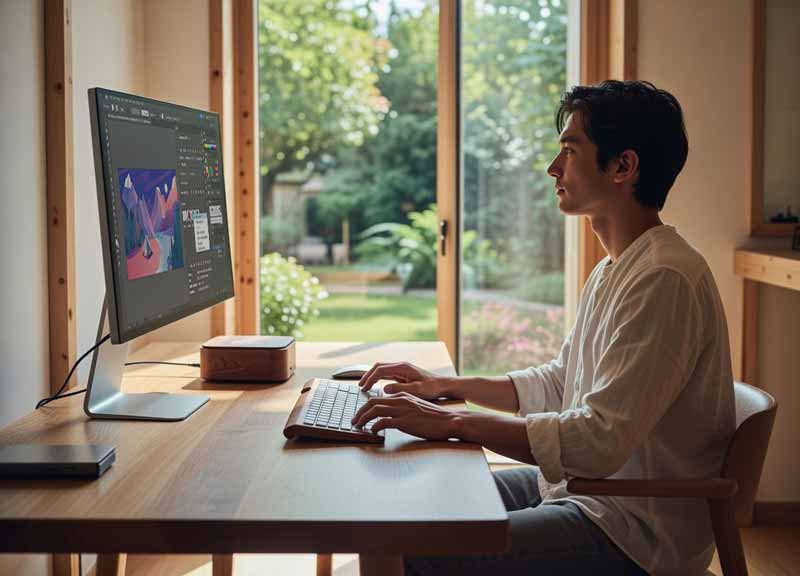
How much time do you spend at your desk? Six, eight, sometimes ten hours a day? For a long time, we evaluated our computing tools on a single scale: performance. Is it fast? Is it powerful?
But in 2026, another question has become vital for our mental health: Does this object make me feel good?
We live in an era of digital saturation. Notifications, blue light, the hum of cooling fans… our brains are in a state of permanent alert. To counter this, interior design is undergoing a profound transformation. It is no longer just about “decorating,” but about “healing.” This is the advent of Sensory Design.
Goodbye cold metal, creaky plastic, and glossy surfaces that act as dust magnets. Make way for the organic, the matte, for fabric and wood. Here is a breakdown of a trend that is transforming our workspaces into sanctuaries.
I. The Dictatorship of Plastic and Metal is Over
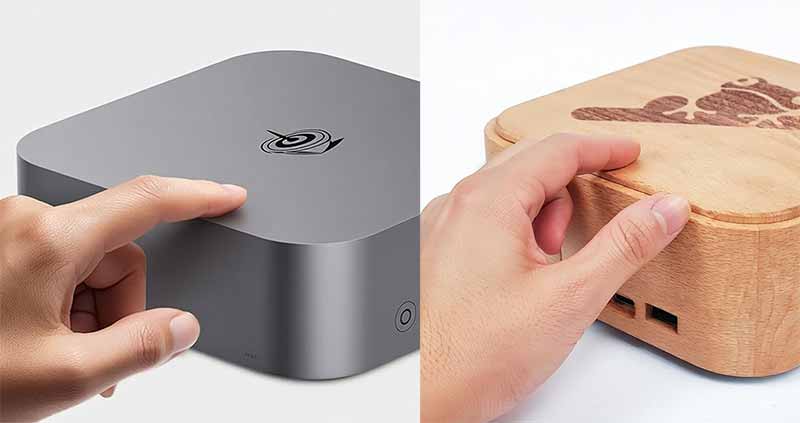
Touch your current mouse. Touch your PC case or your monitor stand. What do you feel? Likely hard ABS plastic or cold aluminum. These materials are industrial standards for a reason: they are inexpensive and easy to mold. But sensorially, they are “dead.” They have no variation, no warmth, no scent.
Biophilia (our innate need for a connection to life) proves that contact with natural materials reduces cortisol, the stress hormone. This is why we are seeing technological objects dressed differently:
- Acoustic fabric on speakers or USB hubs to soften the edges.
- Wool felt for desk mats, replacing neoprene mouse pads.
- Vegetable-tanned leather for cable management.
We are seeking familiar, reassuring textures beneath our fingertips—textures that anchor us in reality.
II. Visual Silence: The Harmony of Shapes and Hues
Well-being also passes through the eyes. A desk cluttered with black cables and aggressive LEDs creates what is known as “visual noise.” This subconscious disorder fatigues the mind.
To create a Zen space, we must prioritize materials that absorb light rather than reflect it. This is where the choice of wood species becomes an emotional one:
- Beech (Clarity): With its fine grain and light, almost creamy hue, beech brings light and optimism. It is perfect for minds that crave order and clarity.
- Sipo (Warmth): This exotic wood with mahogany reflections brings a reassuring depth. It evokes ancient libraries, stability, and protection.
Having an object made of these materials on your desk is like setting a visual anchor. When your eyes leave the tiring screen, they rest on the natural complexity of the wood fibers. It is a regenerative micro-break.e.
III. Sixwood: The Inspiring Totem Object
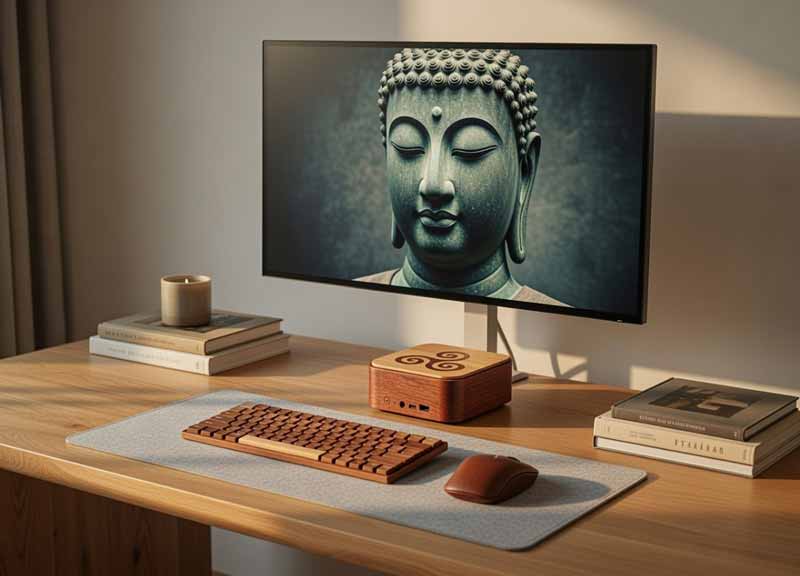
At Sixwood, we have pushed this reflection on “well-being through the object” to its peak. We didn’t want to build just another computer. We wanted to create a Totem.
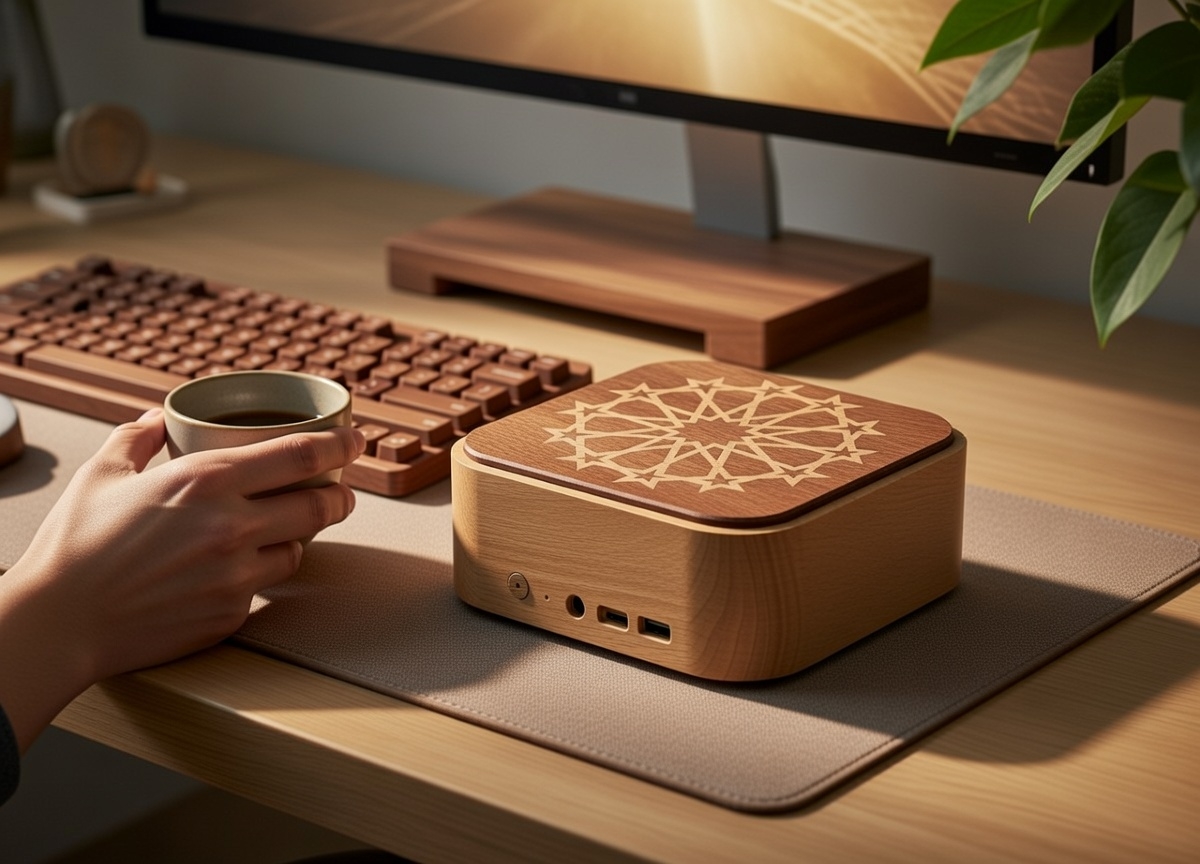
For our “Well-being” collections, we have banished visible metal and plastic. We work with solid Beech and Sipo—not as veneers, but as sculpted blocks.
The Inlay: A Sacred Geometry
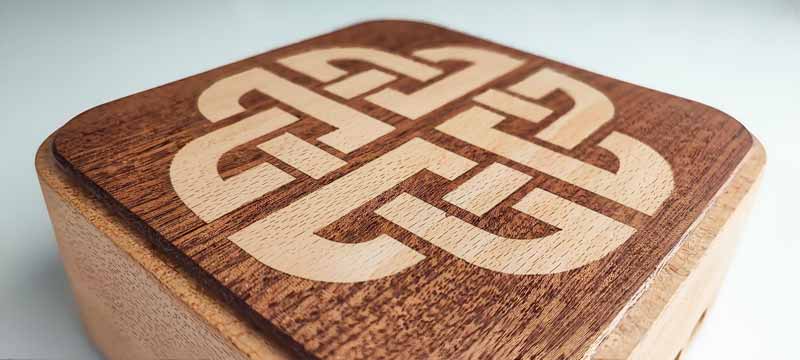
Why do we insist so much on our inlaid patterns on the top cover? Because from above (your daily point of view), your machine should not be an anonymous black box. The inlay (crafted using the wood-on-wood method) creates inspiring patterns:
- Fluid lines reminiscent of water or wind to soothe.
- Structured geometries to foster concentration.
It is modern marquetry. Running your hand over it provides immediate satisfaction: it is perfectly smooth, yet the eye perceives the depth of the two wood species in dialogue. It is an object with a soul. lisse, et pourtant, l’œil perçoit la profondeur des deux essences de bois qui dialoguent. C’est un objet qui a une âme.
IV. Hearing: The Ultimate Luxury is Silence
Well-being is impossible in noise. The constant hum of a low-end PC fan is a major source of cognitive fatigue. In a Zen approach, the object must know how to be forgotten.
This is the paradox of our Mini PCs: they are visually beautiful enough to be displayed, yet acoustically discreet enough to go unnoticed. The revolution of ultra-optimized ventilation allows you to hear your own thoughts, or the soft music filling the room—not the machine.
V. Creating Your Sanctuary: Essential Accessories
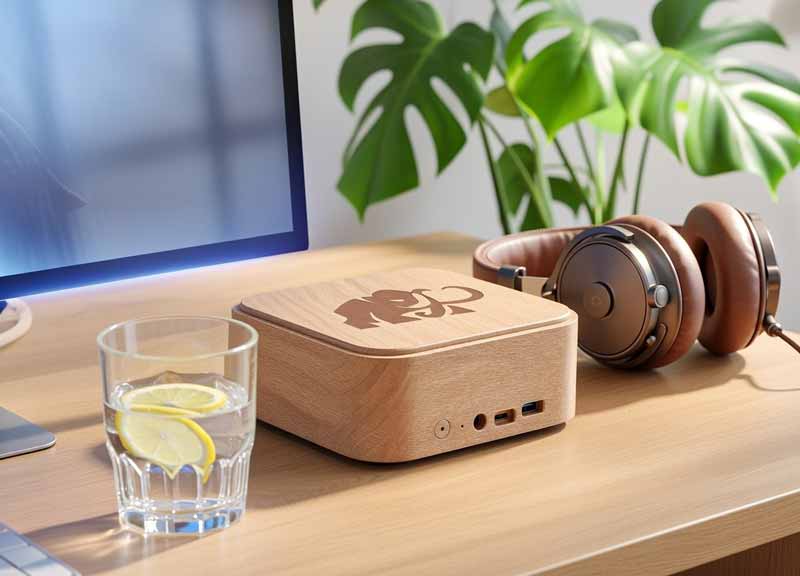
To accompany your wooden Mini PC and complete this “cocoon” atmosphere, here are a few accessories that share our philosophy of organic and sustainable design.
1. Soft, Indirect Light: Forget the harsh overhead light. For a Zen atmosphere, you need warm light (2700K – 3000K).
Our recommendation: Wood and linen desk lamps, or minimalist models like the articulated wooden Tomons lamps.
2. Natural Organization: To store your pens and USB drives, avoid metal wire mesh pots.
Our recommendation: Opt for bamboo or walnut desk organizers. They compartmentalize clutter while adding a touch of nature.
3. Ergonomic Fabric Seating: While leather has its fans, breathable fabric (like Mesh or Kvadrat fabric) offers a softer, less “cold executive” feel.
Our recommendation: Look for ergonomic chairs that mix light structures with heather gray fabric—much more visually soothing than red and black “gamer” chairs.
Conclusion: Investing in Your Environment is Investing in Yourself
Replacing a metal tower with a Sipo wood Sixwood Mini PC, or swapping a plastic mouse pad for felt, is not mere vanity. It is a re-appropriation of your living space.
In a virtual world, the need to touch real material becomes visceral. We firmly believe that the objects surrounding us rub off on our mood. If they are beautiful, soft, silent, and natural, then we work with more calm and creativity.
Do not let industrial standards dictate your environment. Choose organic.