
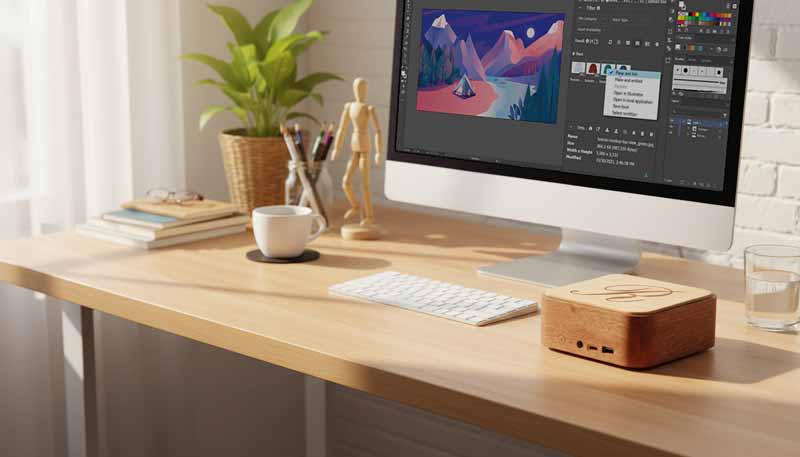
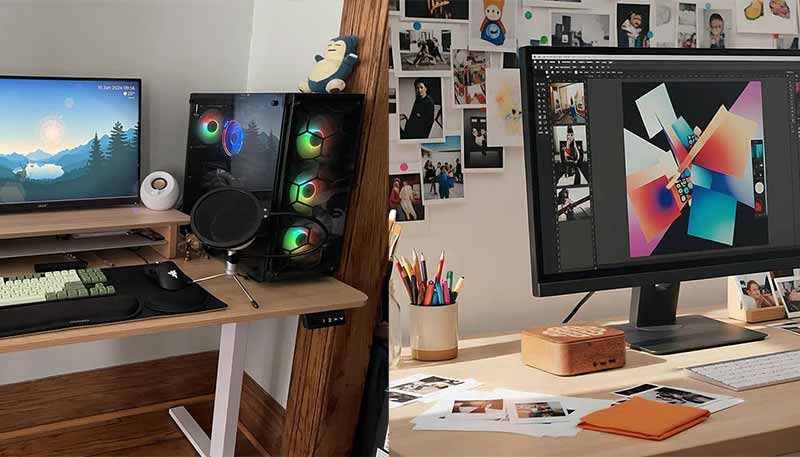
A strange uniformity has taken hold of our lives over the last two decades. Whether you walk into an apartment in Paris, Berlin, or New York, you are likely to find the same references: the same beige Scandinavian sofa, the same white flat-pack shelving, and sitting prominently on the desk, the same gray aluminum computer or the same black plastic tower.
We have accepted standardization. For practical and economic reasons, we have allowed industry to dictate the aesthetics of our intimacy. But an undertow is forming—a growing fatigue with “copy-paste” living.
In 2026, true luxury no longer lies in owning an ostentatious brand, but in singularity. We no longer want to be robots living in catalog interiors. We want our objects to tell a story: our own.
In this article, we analyze the major transition from “Ready-to-Furnish” to “Bespoke,” and how this quest for identity is finally reaching the last bastion of uniformity: our computing hardware.
I. The Psychology of the Interior: “My Home is Me”
Why this sudden thirst for customization? Housing sociologists explain it well: in a globalized, digital, and often anxious world, the home has become the ultimate refuge—an extension of our identity.
To customize is not just to choose a color. It is an act of appropriation. It is saying: “This object didn’t just roll off a factory line for anyone. It was finished for me.” It is the shift from passive consumption to co-creation.
The Era of “Craftcore” and Imperfection
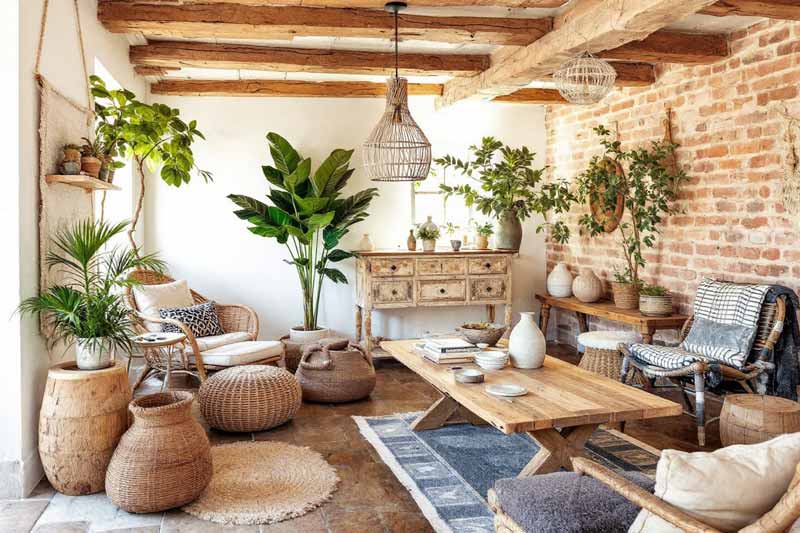
This trend has a name: Craftcore. We are rediscovering a taste for texture, for grain, and for the tactile. We are moving away from the cold, lacquered, and sterile surfaces of the industrial era toward living materials that develop a patina over time—wood, ceramics, linen, stone. We seek emotion in the object. A standardized computer, mass-produced in a million identical copies, is by definition devoid of emotion. It is purely functional. Yet, we live with our machines ten hours a day. Why should they remain emotional ‘dead zones’ in our carefully curated interiors?
II. Industries That Have Already Revolutionized
Computing is lagging behind. Other sectors have already realized that the customer wants to take back power over design.
1. Kitchens: Hacking the Standard
It is the most striking example. Companies like Plum Living and Bocklip have built empires on a simple idea: taking standardized bases (IKEA cabinets) and allowing customers to add ultra-personalized fronts in walnut, matte lacquer, or cane webbing. The customer becomes the architect of their own kitchen. They no longer settle for a design; they compose it.
2. Modular Furniture
Brands like Tylko or Shelved allow you to design furniture down to the last millimeter. You don’t just buy a shelf; you create a rhythm of cubbies adapted to your wall. Industry adapts to the person, not the other way around.
3. Luxury Automobiles
In high-end cars, customization has been the norm for a long time. At Bentley or Porsche, choosing the stitching color or the wood species for the dashboard is the very essence of the purchase. It creates an unbreakable bond between the driver and the machine.
So, why do we still accept having the exact same gray rectangle on our desks?
III. Computing: The Last Bastion of Uniformity (Until Now)
The tech sector has long resisted this trend for one simple reason: industrial complexity. Manufacturing a computer requires such precision that brands like Apple, Dell, or HP have locked everything down. Design is “top-down”: a designer in California or Taiwan decides for you.
The result? “Technological Monotony.” Whether you are a creative graphic designer, a rigorous notary, or a visionary architect, you have the same computer. It is a visual aberration. Your work tool says nothing about you; worse, it often clashes with the effort you put into decorating your room.
This is where the SixWood vision comes in. We believe that high technology (AMD Ryzen™ processors, DDR5 RAM, NVMe SSD) must meet high craftsmanship (fine cabinetry).
IV. Marquetry 2.0: When the Client Becomes the Artist
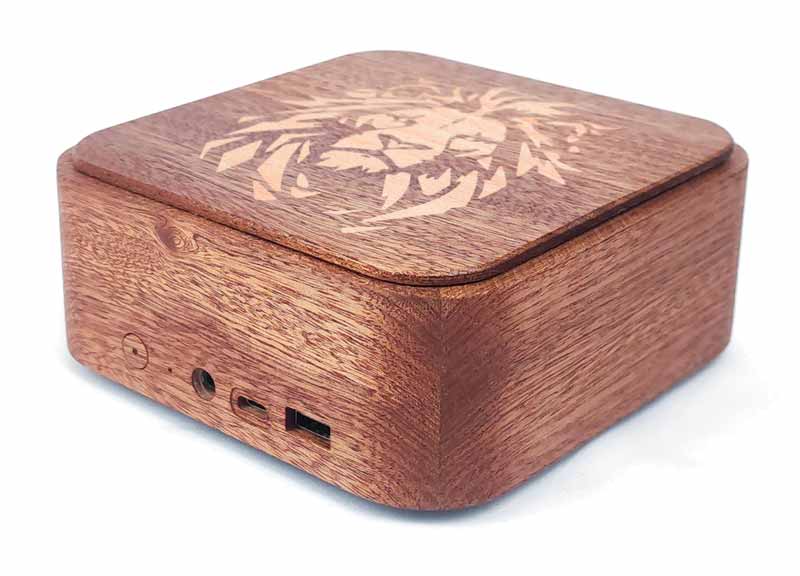
At SixWood, we have pushed customization far beyond the choice of wood species. We have reintroduced an ancient technique, once reserved for royal furniture: marquetry, or the art of the inlay.
But we have modernized it.
The “Wood-on-Wood Inlay” Concept
The idea is not to print a pattern (which would be temporary) or to apply a sticker. The idea is to inlay another wood species to create an indelible contrast. Your computer cover becomes a canvas.
- Geometric Patterns: For lovers of minimalism—Art Deco lines or fractal patterns that echo the mathematical precision of the machine humming inside.
- Organic Patterns: Leaves, trees of life, and fluid curves that “break” the rigidity of technology and soothe the eye.
- Absolute Bespoke: Our ultimate offering. A logo? A family crest? A drawing you sketched? We can integrate it into the wood.
Imagine an architecture firm equipping its workstations with walnut Mini PCs, each engraved with the agency’s logo. Imagine a musician whose studio PC features a soundwave inlaid in oak. The computer is no longer an interchangeable tool; it becomes a member of the team.’ordinateur n’est plus un outil interchangeable, il devient un membre de l’équipe, un porteur de votre identité.
V. How does it work? The Alliance of Digital and the Hand
Il esThis customization is not a gadget; it is a complex process that justifies the high-end positioning of our machines.
- Wood Selection: We choose solid wood blocks with characterful grain. Every PC is unique by nature; wood grain is like a fingerprint.
- Digital Precision: Your pattern is digitized and sent to our CNC. This machine carves the wood to a tenth of a millimeter, creating contrast without damaging the cover’s structure.
- Manual Finishing: The stage the machine cannot do. Once carved, the pieces are glued, then hand-sanded. Finally, we nourish the wood with natural oils to reveal the motif’s contrast and ensure a silky touch.
It is this blend of high technology and ancestral gesture that creates the soul of the product.qui crée l’âme du produit.
VI. Beyond Aesthetics: A Committed Choice
Choosing to customize your computing tool is also an act of resistance against planned obsolescence.
When we personalize an object, we become attached to it. You don’t throw away a computer engraved with your initials or an artistic motif after two years just because a new model came out. You keep it. You let it evolve (by upgrading the RAM or SSD, which is simple on our models). You repair it.
Customization is the best guarantee of durability. A standard object is disposable. A personalized object is a heritage.
In a world where everything tends to become virtual and ephemeral, re-anchoring your technology in material and personal choice is the ultimate luxury. Stop being a serial number. Become the author of your environment.